How to Make a French Knot That Stays Put
How to make a French knot that stays put: Keep the fabric taut, wrap the thread 1 to 2 times, and send the needle back in 1 to 2 fabric threads away from…
How to make a French knot that stays put: Keep the fabric taut, wrap the thread 1 to 2 times, and send the needle back in 1 to 2 fabric threads away from…
How to do satin stitch without gaps or twisting usually comes down to three controls: hoop the fabric firmly, keep stitches edge to edge, and use a stitch…
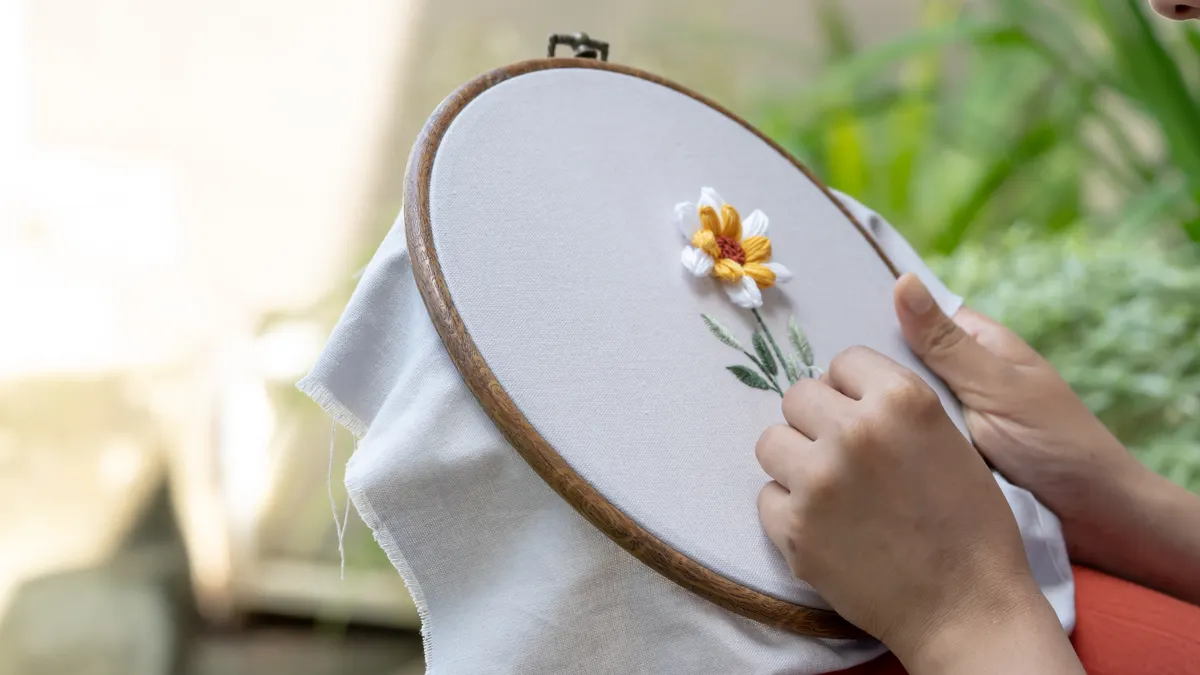
The right needlework support system depends on three things: how much tension your fabric needs, how long you plan to sit with the piece, and how portable…
A backstitch cleanly for outlines and seams is a good choice when you want a line that looks continuous, holds its shape on curves, and reads clearly…
Choose embroidery floss, perle cotton, or yarn based on stitch size and fabric count, not brand name. If you want one fast rule for Embroidery floss vs…
Cross stitch for beginners: how to start your first project: A first cross stitch project works best when it stays small, simple, and easy to count. That…
Cross stitch vs embroidery: which technique fits your project? Cross stitch is the safer choice if you want a predictable first project on gridded fabric…
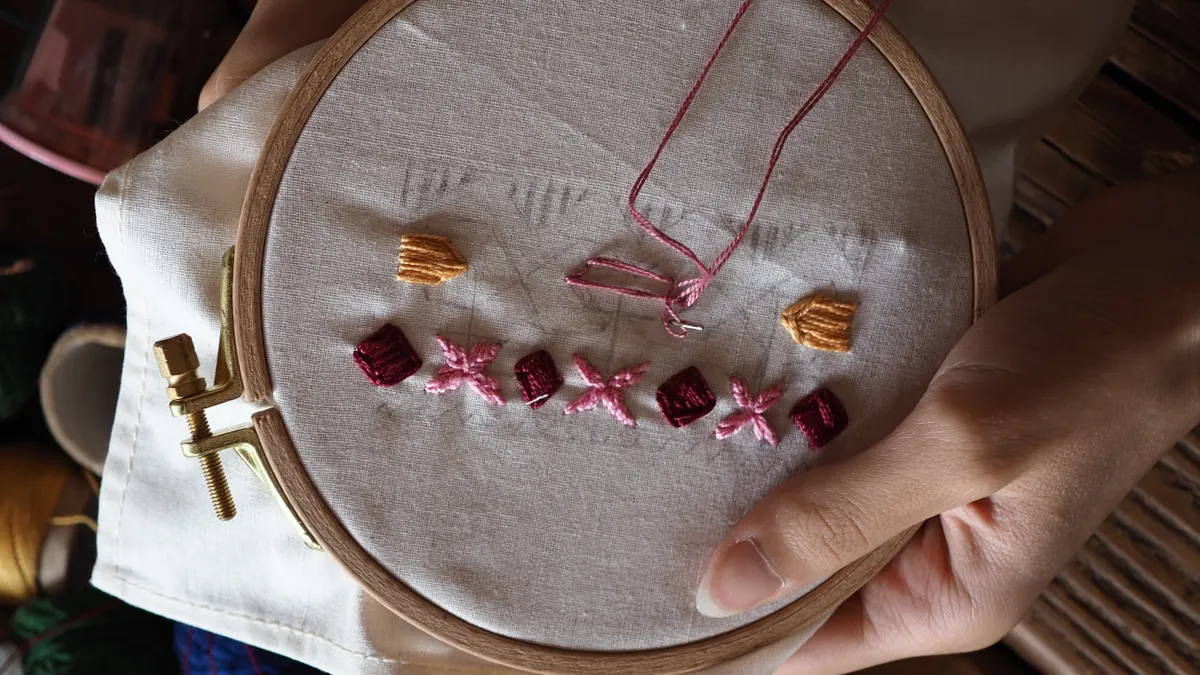
The basic embroidery stitches every beginner should learn are the running stitch, backstitch, satin stitch, stem stitch, and French knot. Those five cover…
I was scrolling through my feed last week when I saw a beautiful embroidery piece shared by a friend. Intrigued,…
Picture this: you’re strolling through the vibrant streets of Houston, and a beautifully embroidered textile catches your eye. Perhaps it’s…