Last updated: October 22, 2026
Key Takeaways
- Cross stitch offers more structure; embroidery offers more flexibility.
- Cross stitch is often the easier first finish for a low-risk beginner project.
- Cross stitch suits counted fabric and charted designs.
- Embroidery suits images where texture and line matter more than the grid.
Cross stitch vs embroidery: which technique fits your project? Cross stitch is the safer choice if you want a predictable first project on gridded fabric; embroidery is the better choice if you want freer shapes, more texture, and are willing to wrestle with a wider skill set. I write about needlework stitches and technique because the difference is not just aesthetic — it changes the fabric, the pattern, the finish, and how quickly a beginner can get from “blank cloth” to “finished piece.”
The real difference between cross stitch and embroidery
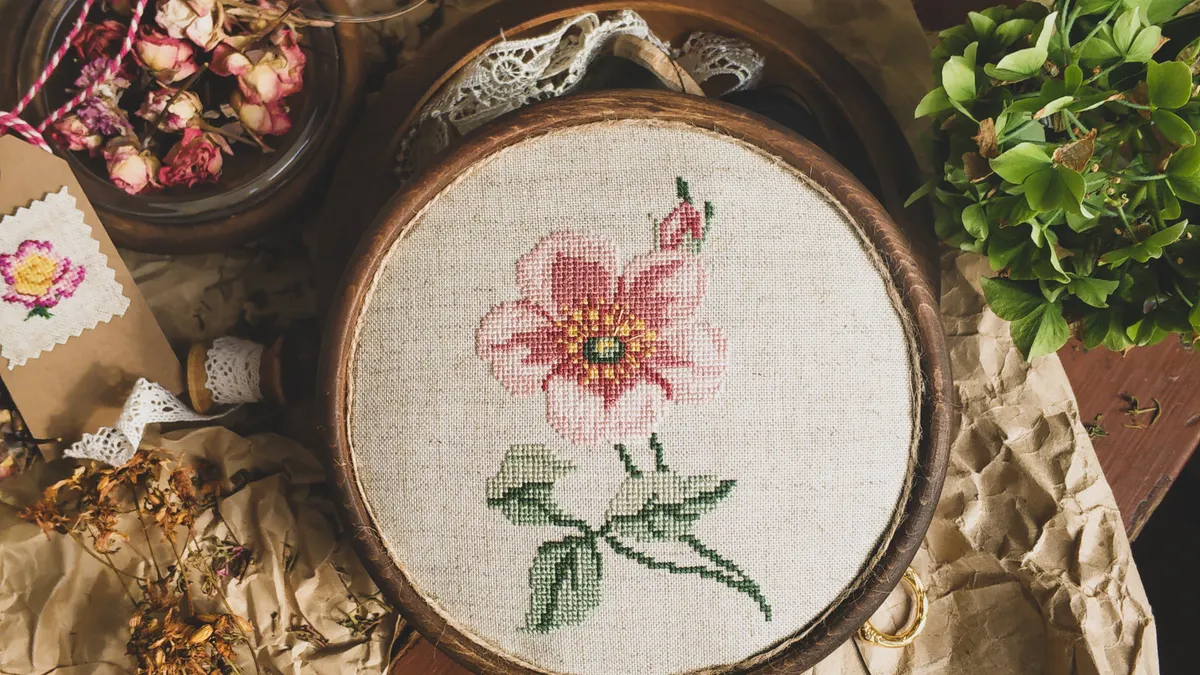
Cross stitch wins on structure, while embroidery wins on range. Cross stitch uses X-shaped stitches placed on an even weave such as aida cloth or evenweave linen, so the design is mapped to a grid and the result tends to look neat and geometric. Embroidery is the broader umbrella: surface embroidery can use many stitches on many fabrics, from cotton to linen fabric, and the design can follow curves, fill irregular shapes, or build texture with thread alone. According to DMC, counted cross stitch uses charted symbols on even-weave fabric, while embroidery covers many surface stitches on a wider range of textiles. (Source: DMC)
That difference changes the whole project experience. In cross stitch, the pattern usually tells you exactly where each stitch goes, often counted over 14-count, 16-count, or similar fabric counts. The count matters because it sets stitch size and the overall scale of the design. In embroidery, the pattern may be traced, transferred, or drawn directly onto fabric, which gives more freedom but also more room for proportion problems. A flower petal can be off by a few millimetres and still look fine in embroidery; in cross stitch, the grid will show every drift.
The visual style is just as distinct. Cross stitch reads like pixels or tiny tiles. Embroidery can look sketchy, painterly, dimensional, or sculptural depending on the stitches used. If the project goal is a tidy sampler, monogram, ornament, or small motif with crisp edges, cross stitch is usually the cleaner path. If the goal is a line drawing, a botanical scene, lettering with flourishes, or a fabric piece that should look hand-drawn rather than charted, embroidery has the edge.
One common mistake is treating these as equal beginner options in every case. They are not. Cross stitch has a steeper initial rule set about counting and fabric count, but a simpler visual logic. Embroidery has less counting but more stitch variety, so the first hurdle can be broader even when the stitches themselves are simple. A beginner should compare the project, and if needed, consult a professional teacher or shop owner before choosing. That is the key trade-off. The Royal School of Needlework also treats embroidery as a broad family of techniques rather than a single uniform skill. (Source: Royal School of Needlework)
How the learning curve changes your first project
Cross stitch is easier to start when the main goal is a low-risk first finish. The reason is not that it requires fewer moves per stitch; it is that the pattern system does most of the work. Aida cloth gives visible squares, so beginners can place each X without guessing where the next stitch should land. That reduces the chance of crooked lines, uneven spacing, and “why does this look wrong?” frustration. On 14-count fabric, the grid is especially easy to read.
Embroidery is easier only when the project is simple in linework and the maker is comfortable following a drawn outline. The fabric is usually plain, so the eye has to judge spacing rather than follow a grid. That can be liberating, but it also means a beginner must manage fabric tension, stitch direction, and line smoothness at the same time. A simple stem stitch or backstitch line can still look elegant; a badly planned fill area can look lumpy fast.
For a first project, the right question is not “which is harder?” but “what kind of mistakes will annoy me more?” Cross stitch mistakes are visible in count errors; embroidery mistakes show up as wobbly lines, uneven fills, or puckered fabric. If a beginner gets satisfaction from checking boxes and seeing a pattern emerge row by row, cross stitch is the better fit. If a beginner wants to draw with thread and does not mind reworking lines, embroidery is more rewarding.
The practical consequence is time. Cross stitch usually gives a beginner a clearer sense of progress because the design fills in cell by cell. Embroidery can feel slower at the start, especially on larger motifs, because the finished image depends on line quality and stitch control rather than simple coverage. That is why cross stitch is usually the better first pick for someone who wants one finished hoop within a manageable number of evenings, while embroidery suits someone who wants a more open-ended making process.
Cross stitch: who should actually use it, and who shouldn’t
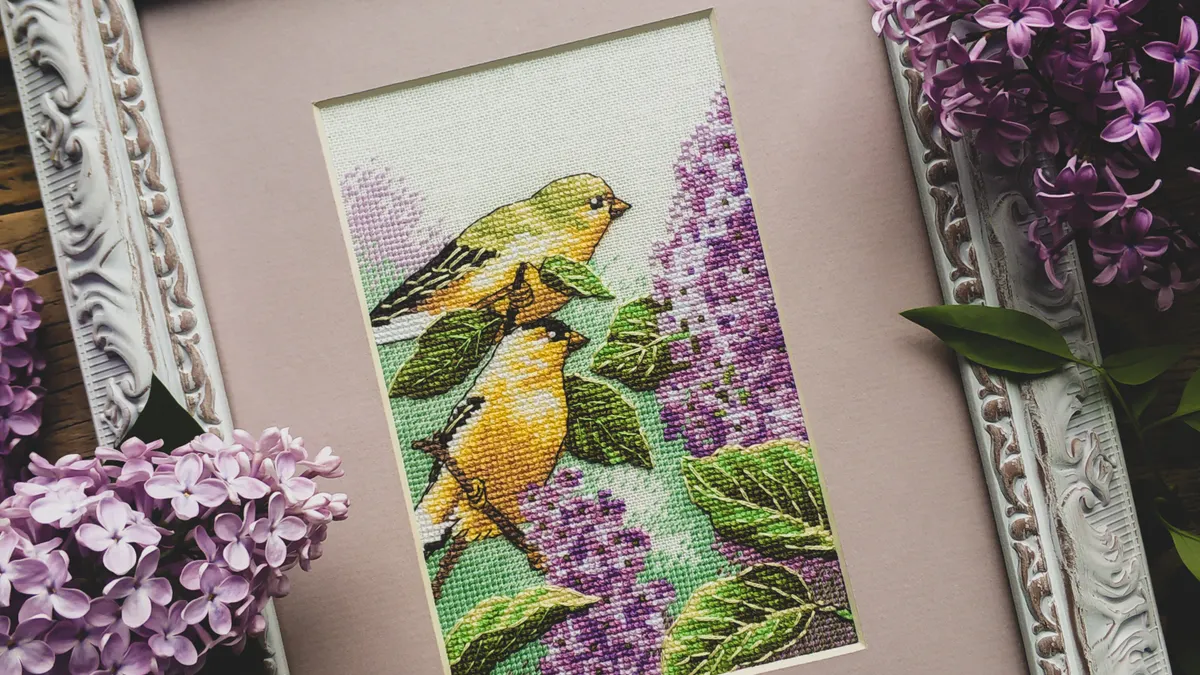
Cross stitch wins for someone who wants a guided project on counted fabric. It works especially well on aida cloth because the weave makes the stitch placement obvious. It also suits motifs with sharp edges, repeating shapes, alphabets, ornaments, and charted artwork. If the reader wants to follow a printed pattern and end up with something that looks like the design photo, cross stitch is the safer bet.
Its biggest strength is consistency. Once the count is set, the size of the finished design is predictable. That matters if the project must fit a frame, a card front, a cushion panel, or a specific hoop diameter. Cross stitch also produces a tidy front that many beginners find encouraging. The thread crosses over itself in a regular way, so the surface reads as organized even when the maker is still learning tension and direction.
The weakness is rigidity. Cross stitch is less forgiving when the design needs curves, shading, or highly organic shapes. It can suggest a curve, but it still looks built from little squares. That is fine for pixel-style art and many sampler motifs; it is less satisfying for flowing vines, loose portraits, or text with delicate flourishes. Another drawback is that finishing can get bulky if the design is dense or if too many strands are used on the wrong fabric count.
Cross stitch is not the right first choice for someone who hates counting, wants spontaneous drawing, or expects the fabric itself to disappear into the background. It is also a poor match for projects that rely on rich texture and layered stitch effects. Someone who wants a bird feather to look feathery rather than tiled should probably look at embroidery instead.
Embroidery: the specific situations where it wins
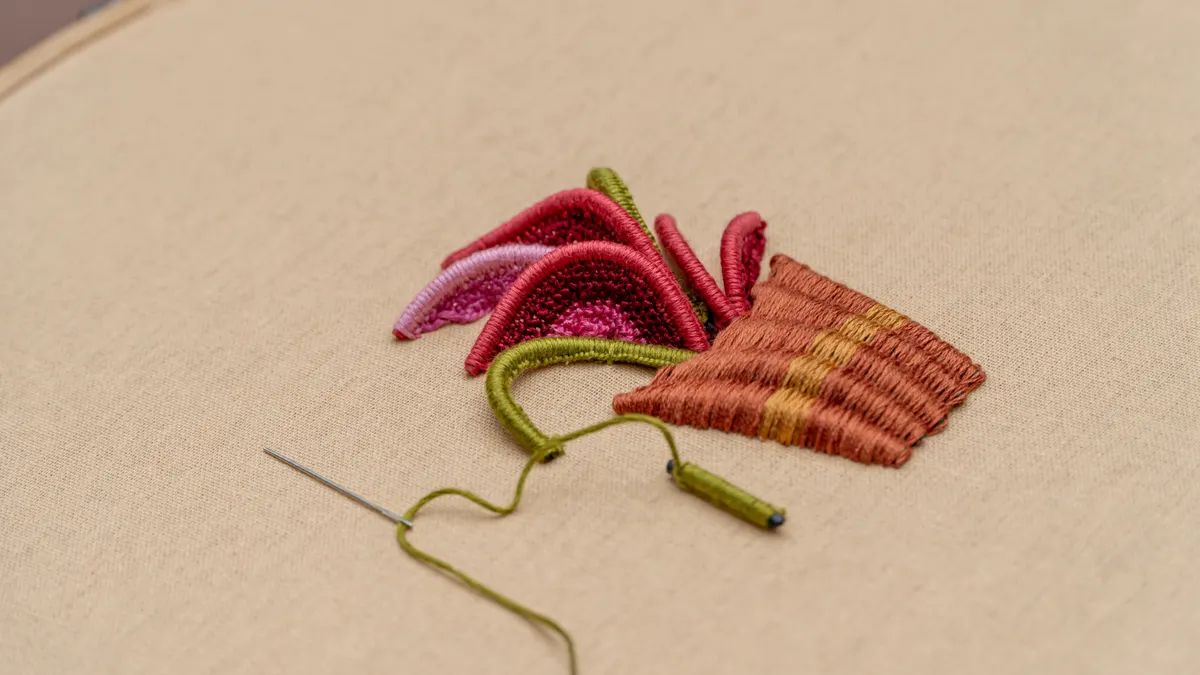
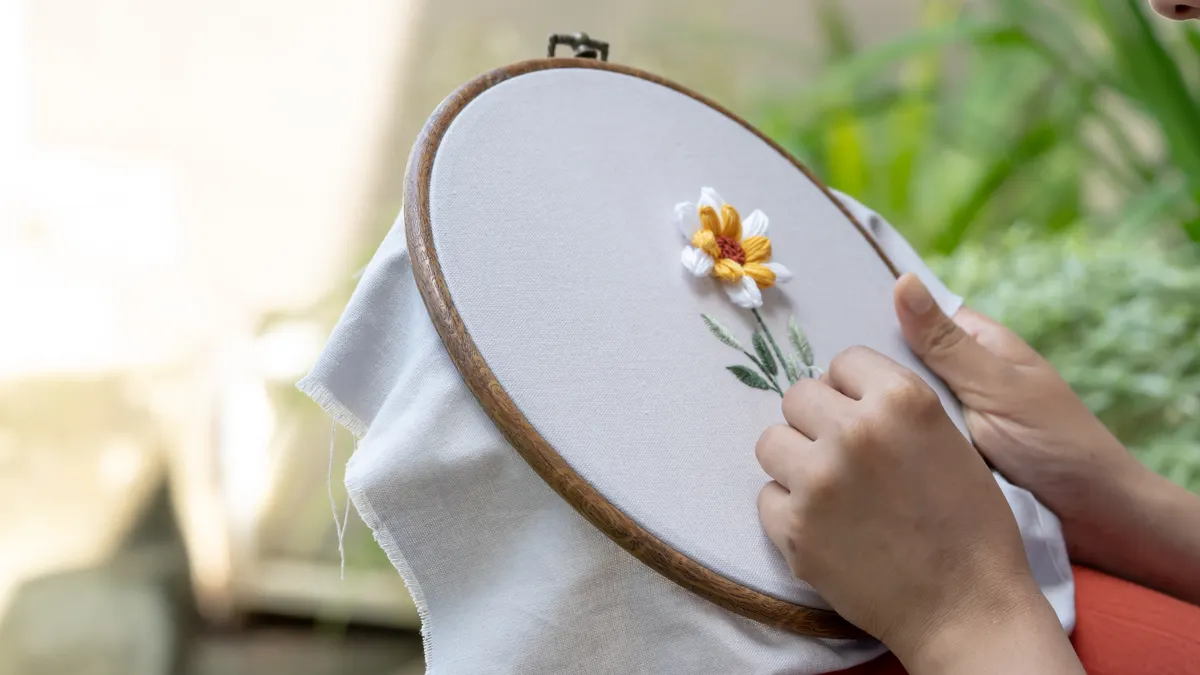
Embroidery wins when the image matters more than the grid. Surface embroidery lets the maker follow curves, outline shapes, shade leaves, build petals, or combine stitches to create depth. Linen fabric is a common choice because its weave supports detailed stitch work while still feeling less rigid than counted cross stitch fabric. The result often looks more like illustration or textile drawing than charted pixel art.
That freedom is the main advantage. A monogram, floral sprig, constellation, garment embellishment, or freehand motif usually benefits from embroidery because the lines can bend naturally. The fabric choice also broadens. Cross stitch strongly prefers even-weave grounds, but embroidery can work on many woven fabrics as long as the weave is stable enough for the stitch style. That makes it a strong option for textile surfaces that need a freehand look.
The drawback is control. Embroidery invites choices at every step: where to place the motif, which stitch to use, how tightly to pull the thread, and how to keep the fabric smooth. Those choices are what make it flexible, but they also make it easier to go off course. Beginners often discover that a line can be technically correct and still look awkward if the spacing is inconsistent or the fabric has puckered. Thread layering can also become messy if the design is revised midstream. For guidance on stitch families and basic methods, the Textile Arts Center and the Smithsonian both present embroidery as a broad, variable practice rather than a single standard process. Textile Arts Center Smithsonian
Embroidery is not the right pick for someone who wants a purely charted process or a finished object with the least possible uncertainty. It is also a poor fit if the reader wants the fabric to do most of the visual organizing. Cross stitch gives more built-in guardrails. Embroidery gives more artistic freedom and more ways to make a project feel personal, but that freedom comes with more decisions and more chances to dislike the result halfway through.
The honest side-by-side
Cross stitch is the better choice when the decision depends on structure, predictability, and a clean finished look. Embroidery is the better choice when the decision depends on drawing, texture, and flexibility. The table below shows where that split matters most.
| Criteria | Cross stitch | Embroidery | Winner for [condition] |
|---|---|---|---|
| Fabric choice | Best on aida cloth and other counted grounds | Works on many fabrics, including linen fabric | Embroidery for garment and mixed-fabric work |
| Pattern style | Charted, grid-based, pixel-like | Freeform or transferred outlines, more organic | Cross stitch for chart-following beginners |
| Stitch count | Repeats the same X shape | Many stitch types, not just one motion | Cross stitch for mental simplicity |
| Visual style | Neat, geometric, tiled | Smooth, painterly, textured | Embroidery for floral or illustrative designs |
| Beginner frustration | Counting errors are the main risk | Uneven lines and fabric puckering are the main risk | Cross stitch for first-time finishers |
| Project difficulty | Easier to standardize | Easier to customize, harder to control | Cross stitch for predictable results |
| Finished look | Crisp, regular, high order | Soft, varied, more dimensional | Embroidery for hand-drawn effect |
| Scalability | Great for small to medium motifs | Better for large, flowing compositions | Embroidery for larger decorative pieces |
| Layout precision | Strong if the pattern is charted | Depends on transfer accuracy | Cross stitch for exact placement |
The table hides one subtle point: cross stitch is not automatically “simpler” in every sense. It is simpler when the maker wants a method that enforces order. Embroidery can be physically simple and still be harder to plan. That is why the winning choice depends less on ambition and more on how much structure the reader wants from the fabric itself.
What finished look do you actually want?
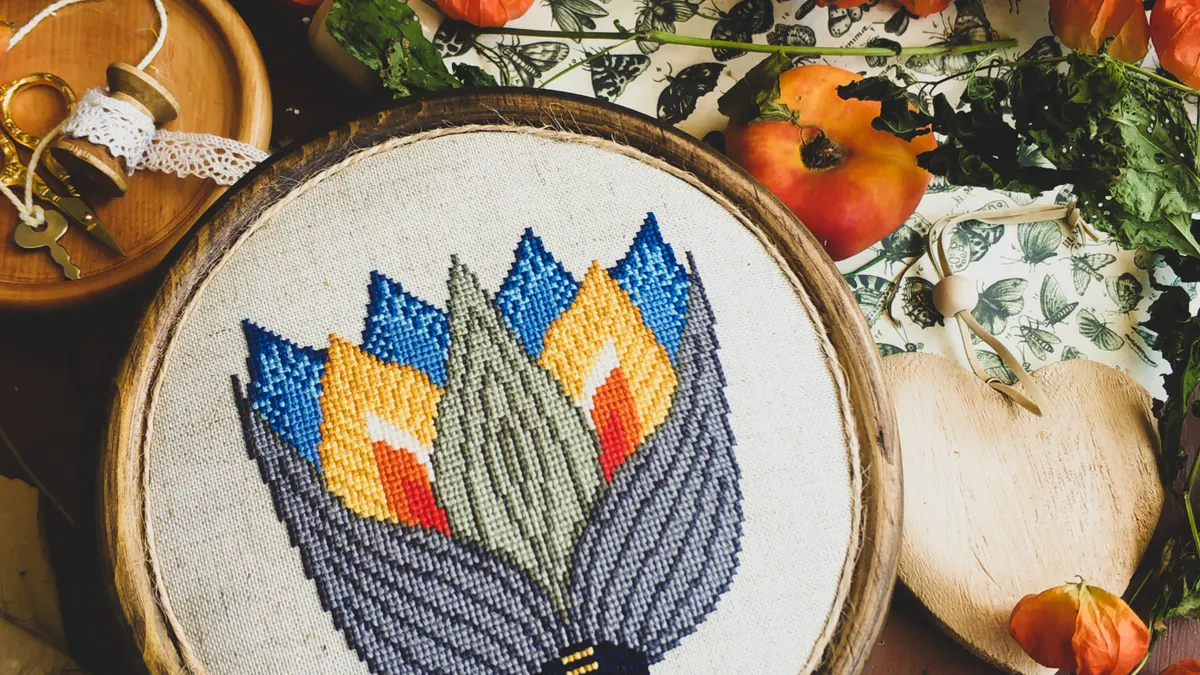
Cross stitch wins if the ideal finish is crisp, tidy, and intentionally regular. The hallmark is the square grid showing through the design logic, even when the image itself is complex. That makes it ideal for lettering, icons, samplers, holiday motifs, and designs that should read clearly from a short distance. On framed pieces, the result often feels polished because the borders and shapes align cleanly.
Embroidery wins if the finish should feel hand-drawn, soft, or dimensional. The thread can sit on top of the cloth in a way that gives petals, stems, borders, and shading more visual movement. The look is less uniform, which is exactly the point. On a linen fabric shirt, tote, or hoop art piece, that irregularity can make the work feel bespoke rather than charted.
This is where the choice often becomes obvious. If the reader wants to stitch a design that could be converted into a pixel image without losing much meaning, cross stitch is the right tool. If the reader wants a design that would look better as an illustration than as a grid, embroidery is the better tool.
A useful way to think about it: cross stitch is closer to building with small tiles; embroidery is closer to drawing with thread. Tiles are better for structure. Thread drawing is better for expression. That distinction is why a tiny fox, a name, or a geometric border often looks best in cross stitch, while a flower stem, face outline, or garment accent usually looks better in embroidery.
When to reconsider the choice entirely
Cross stitch and embroidery are both wrong if the real problem is not technique but fabric or scale. If the project is on a stretchy knit, a very loose weave, or a delicate material that cannot tolerate repeated needle passes, neither method is the first thing I would recommend without stabilizing the fabric and planning carefully. If the design needs heavy coverage, both techniques may be too slow compared with appliqué, print, or machine methods.
Cross stitch should also be reconsidered if the image contains lots of curves, gradients, or tiny directional changes. The grid will fight that design. Embroidery should be reconsidered if the maker wants a dead-simple process with almost no planning. The freedom of surface embroidery is real, but so is the number of decisions.
There is one more exception: if the project is intended as a class, club activity, or gift for someone who hates counting, embroidery can be the friendlier social choice even when cross stitch would be easier on paper. A beginner who enjoys improvisation may finish an uncomplicated embroidered sprig with more enthusiasm than a small charted cross stitch design. That matters because the best technique is the one the maker is most likely to complete.
For a deeper map of stitches and methods, I point readers back to the broader needlework stitches and technique hub rather than forcing every project into one lane.
The verdict: which one to choose and why
Choose cross stitch if you want a beginner-friendly project with a chart, a counted fabric like aida cloth, and a finished look that should stay neat and geometric. Choose embroidery if you want more freedom in fabric choice, more texture, and a result that looks hand-drawn instead of pixelated. Neither if your fabric is too unstable or your design depends on curves, shading, or a method outside counted or surface stitching.
Is cross stitch easier than embroidery?
Cross stitch is usually easier for a first project because the grid reduces guesswork and the pattern does more of the planning. The fabric count helps place each stitch consistently, which lowers early frustration. Embroidery can be easy too, but it asks the beginner to manage line quality, spacing, and tension on plain fabric at the same time.
Can you combine cross stitch and embroidery?
Yes, and that combination often solves the strengths-and-weaknesses problem of each technique. Cross stitch can supply the structured main image, while embroidery can add outlines, stems, lettering, or small decorative details. The drawback is that the finished piece needs thoughtful planning so the two styles do not fight each other visually, especially on 14-count or 16-count fabric.
Which is better for beginners, cross stitch or embroidery?
Cross stitch is better for most beginners who want a clear first win. The count-based pattern and aida cloth make it easier to place stitches without guessing. Embroidery is better for beginners who want to draw with thread and do not mind more trial and error. If the goal is a finished piece fast, cross stitch usually gives the cleaner start.
Drafted with AI; not yet reviewed by a person.