Last updated: November 03, 2026
Key Takeaways
- Counted charts suit accuracy; freeform embroidery suits movement, shading, or organic line.
- Cross-stitch patterns are the clearest option and have the broadest pattern library.
- Needlepoint patterns work best for handled pieces and structured objects.
- Embroidery patterns describe motion and placement, not only counted squares.
Quick Answer: needlework project types and patterns — The Complete Guide
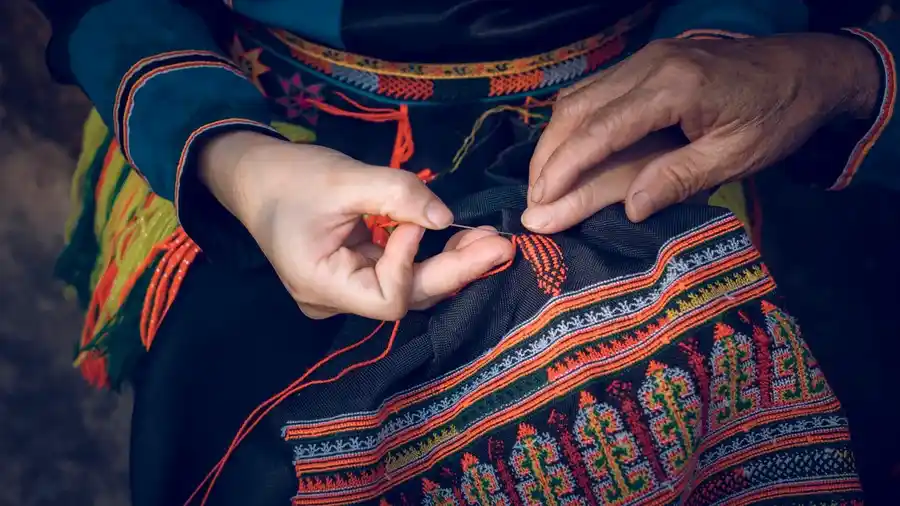
Three choices cover most of the ground here: cross-stitch, counted embroidery, and needlepoint. Cross-stitch is usually the easiest first step; needlepoint lasts well; embroidery gives the most room to move.
Needlework project types and patterns — The Complete Guide also helps you match the pattern to the object. A framed piece, a pillow, or a garment each asks for a different structure. A 14-count Aida chart behaves differently from a 13-mesh canvas project. This shift changes the finished size, the texture, and the time commitment.
Needlework projects split into a few clear families, and the most practical way to choose one is to match the stitch count, fabric, and finish you actually want to make. The right project type matters more than the prettiest pattern cover when the goal is a wall piece, a usable object, or a gift that does not take months of unplanned frustration.
I write about needlework with a pattern-reader’s eye: chart structure, stitch count, fabric choice, thread weight, and finishing method all change how a project behaves in Needlework project types and patterns — The Complete Guide. Real differences show up there.
Which needlework project type should I pick first?
Start with cross-stitch if you want the easiest on-ramp; choose counted embroidery if you want more drawing freedom; pick needlepoint if you want a dense, durable finish that can become a pillow, belt, or ornament. Those three cover most beginners’ needs, but they do not solve the same problem.
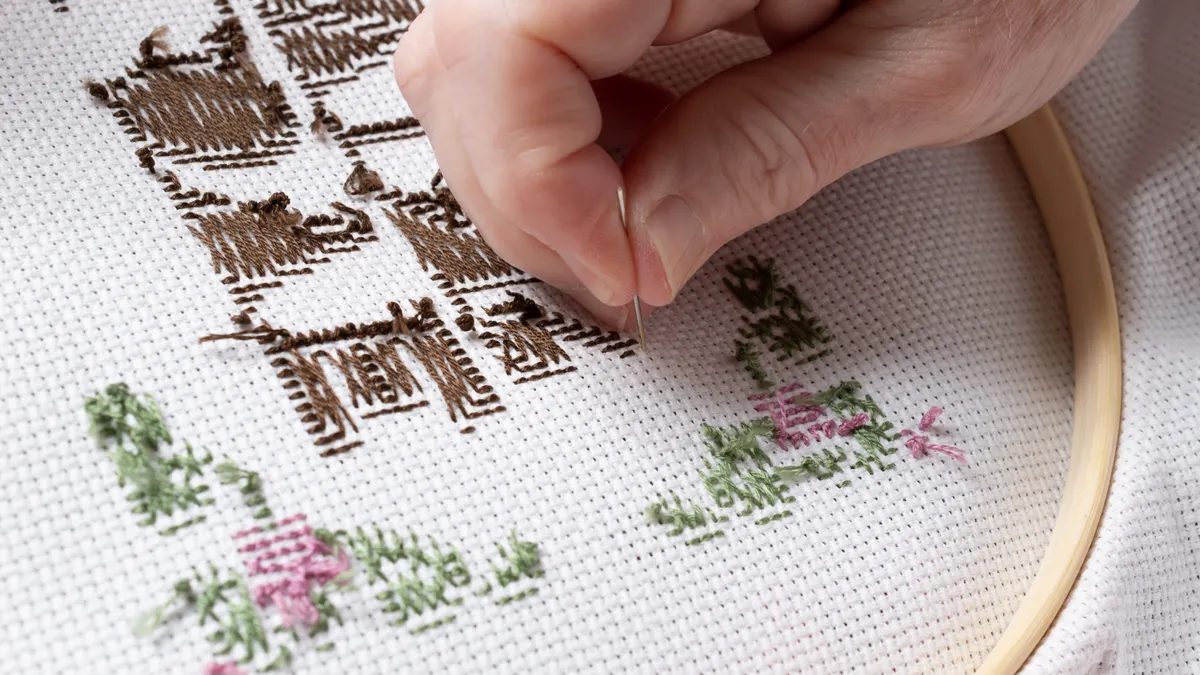
Cross-stitch is the cleanest entry point because the pattern language is simple: one X over one square on evenweave or Aida. Most charts give you a gridded map, a symbol key, floss colors, and a stitch count. That makes it ideal for learning pattern reading without juggling many stitch families at once. The trade-off is obvious: it can look rigid if you want freeform linework, and dense full-coverage pieces become time-heavy fast.
Counted embroidery sits between charted and drawn work. It includes blackwork, pulled-thread styles, and other count-based techniques that rely on fabric structure rather than freehand outlines. Precision is the draw. A design can repeat cleanly and look crisp at small scale. The drawback is that the fabric choice is less forgiving than it looks; if the weave is uneven or the count is hard to see, the project becomes harder to read than the pattern promised.
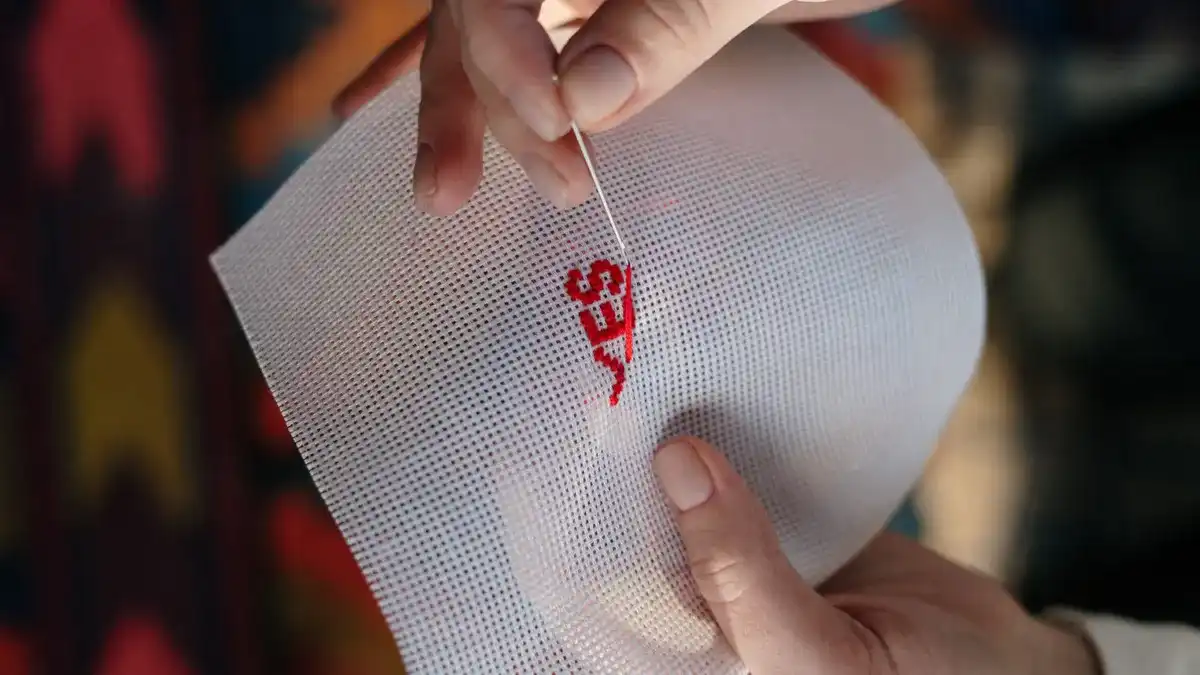
Needlepoint is the most physically sturdy of the three. It is worked on canvas, often 10-, 13-, or 18-count, and the canvas itself supports the stitches. That makes it a strong choice for items that will be handled, stuffed, or finished into functional pieces. It is a poor first choice if you want fast results from a tiny kit, because canvas is less forgiving of thread choice and stitch direction than a simple cross-stitch chart. The mesh can bite back.
If the question is “which type should I start with,” the answer is cross-stitch unless the end use demands canvas strength or the design needs more line variation than counted Xs can give.
The real difference between counted charts and freeform embroidery
Counted charts win when accuracy matters; freeform embroidery wins when the design needs movement, shading, or organic line. That difference sounds abstract until a pattern refuses to fit the fabric you bought.
A counted chart is built around the grid. Every symbol sits in a square or a set of squares, and the design depends on that structure staying visible. This is why cross-stitch and many needlepoint charts list fabric count or canvas count right on the cover. A 14-count Aida chart and an 18-count chart may show the same motif, but the finished size changes sharply because stitch density changes. The practical upside is predictability: you can calculate finished dimensions before you stitch.
Freeform embroidery does not need that rigid map. Stem stitch, satin stitch, chain stitch, lazy daisy, French knots, fishbone stitch, and woven wheel all live more comfortably in this territory. This gives you better control over outline thickness, petal shape, and surface texture. The cost is planning time. A freehand floral may need a traced transfer, a water-soluble pen, or a stitched outline before the filling begins. If the sketch placement is off by even a little, the whole composition can look lopsided.
The common mistake is assuming counted work is “simpler” in every way. It is simpler to count, not necessarily simpler to finish. Large full-coverage charts can swallow skeins of floss and demand precise tension across many hours. Freeform work can be faster on a small motif but punishes inattention to spacing and proportion. That’s where the wheels come off.
For someone who wants a frameable piece with a known final size, counted charts are the safer choice. For someone who wants botanical stems, lettering, or decorative surface texture, freeform embroidery is the better fit. The wrong choice is to buy a freehand-looking pattern and expect it to behave like a charted one.
Cross-stitch patterns: what makes them worth choosing
Cross-stitch patterns are often the clearest instruction set and the most extensive pattern library. They are not the most expressive needlework format, but they are the easiest to evaluate before starting.
A good cross-stitch pattern gives you three things at minimum: stitch count, thread legend, and fabric recommendation. Many patterns also note whether the design uses full stitches only or includes fractional stitches, backstitch, blended threads, or French knots. Those extras matter. A pattern with heavy backstitch can look polished but takes longer than the same stitch count suggests. A design with lots of half stitches can demand more attention than a beginner expects.
Cross-stitch also has the most visible scaling logic. On 14-count Aida, one square equals one stitch and the finished size is straightforward to estimate; on 18-count fabric the same chart finishes smaller. That lets you choose between portability and detail. Small ornaments, bookmarks, sampler bands, and seasonal motifs work especially well here because the pattern can be compact without losing clarity.
The weak point is repetition fatigue. Cross-stitch charts that use full coverage, especially large gradients or confetti-style color changes, can feel mechanical. Small changes in symbol placement can also matter more than people expect, because a one-stitch error can shift a motif across a field and force tedious correction.
This category is best for someone who wants a reliable process and a clear visual result, not for someone chasing freehand texture or sculptural surface work. If the end goal is an heirloom sampler, a small gift, or a framed image, cross-stitch usually gives the best return on effort. It’s workmanlike, but in a good way.
Authoritative stitch and fabric references are easy to verify through the Embroiderers’ Guild and DMC’s pattern and technique documentation, both of which explain fabric counts, stitch types, and chart reading in practical terms.
Needlepoint patterns: where they shine and where they fail
Needlepoint patterns are the right choice when the piece must hold up to handling or become a structured object. They are less forgiving than cross-stitch in material choice, but they reward the maker with texture and durability.
Needlepoint uses canvas as the base, and the stitches are worked through that canvas rather than over a loose weave. That means the mesh count of the canvas becomes part of the design decision. Common canvas counts include 10, 13, and 18, and those counts affect both coverage and detail. Lower counts make the work larger and bolder; higher counts allow finer detail but require more precision.
The strength of needlepoint is finish quality. Cushions, eyeglass cases, belts, tree ornaments, and small decorative panels all make sense in this medium because the stitched surface is stable. It is also one of the few needlework types where texture is not a side effect but the main event. Basketweave tent stitch, continental stitch, and gobelin-style fills create a surface that feels substantial. If you are unsure how a specific project should be handled, consult a professional finisher or a guild resource before you begin, especially for upholstery or wearable pieces.
The downside is cost and correction difficulty. Canvas, stretcher bars, and finer wools or threads can raise the materials commitment quickly. Mistakes are harder to hide than in some other forms because the open canvas grid makes tension issues visible. A beginner who wants instant progress may also find needlepoint slower than expected, since large areas are filled one stitch at a time.
Needlepoint is wrong for someone who wants a tiny, low-cost first project or a design that depends on smooth painterly blending. It is right for someone who wants a finished object that can survive real use and still look deliberate. If the pattern will become a cushion or a framed insert, needlepoint is often the most honest medium for the job.
How do embroidery patterns differ from charted needlework?
Embroidery patterns differ because they describe motion and placement, not only counted squares. That makes them more flexible, but it also makes the instructions easier to misunderstand.
An embroidery pattern may include a line drawing, a color key, stitch suggestions, and placement marks. Instead of telling you “stitch on square 42,” it may say “fill this petal with satin stitch” or “outline the vine in stem stitch.” That is useful when the design depends on shape rather than grid regularity. It is also why embroidery patterns vary so much in difficulty even when the finished size is similar.
The most useful embroidery patterns tell you more than a generic chart does. They often specify thread strand count, fabric type, hoop size, and whether the design uses split stitch, French knots, seed stitch, or long-and-short shading. Those details matter because two patterns of the same flower can behave very differently. A design intended for cotton muslin and six-strand floss will not translate cleanly to dense linen without adjustment.
The risk is vagueness. Some embroidery charts leave too much to interpretation, especially with shading or fill areas. A beginner who wants exact step-by-step numbering may feel stranded. That is not a flaw in embroidery itself; it is a mismatch between the design language and the stitcher’s need for certainty.
Embroidery patterns are a strong fit for logos, lettering, botanical forms, and decorative accents on garments or linens. They are the wrong fit for someone who wants a highly predictable, pixel-like result. If the picture in your head depends on curves, highlights, and stitched outlines, embroidery is the better language.
The honest side-by-side
Cross-stitch wins for structure, needlepoint wins for durability, and embroidery wins for expressive line work. The right pick depends on what the project must do after the last stitch goes in.
| Criteria | Cross-stitch | Needlepoint | Winner for condition |
|---|---|---|---|
| Best first project | Simple chart reading and one basic stitch | More material choices and canvas handling | Cross-stitch for true beginners |
| Finished durability | Good when framed, less structured otherwise | Excellent for handled or upholstered items | Needlepoint for objects that get used |
| Pattern clarity | Very clear symbols and grid logic | Clear, but canvas count affects result heavily | Cross-stitch for predictable planning |
| Visual flexibility | Limited to grid-based forms | Moderate texture, less line freedom | Embroidery for organic shapes |
| Speed on small motifs | Usually fast and tidy | Slower because of canvas coverage | Cross-stitch for ornaments and gifts |
| Surface texture | Flat, even, and graphic | Dense and tactile | Needlepoint for a plush finish |
| Tool and material cost | Usually lower entry cost | Can rise with canvas, threads, and finishing | Cross-stitch for lean budgets |
| Best use case | Framed art, samplers, bookmarks | Pillows, ornaments, belts, inserts | Needlepoint for functional décor |
| Correction difficulty | Moderate; mistakes are visible but manageable | Harder to disguise on open canvas | Cross-stitch for learners who expect errors |
The practical takeaway is plain: cross-stitch is the safest default, needlepoint is the stronger finish, and embroidery sits outside the grid entirely for a more sculptural look. If the only goal is “make something pretty,” any of the three can work. If the goal is “make the right thing for this object,” the medium matters more than the motif.
What pattern details separate a good design from a frustrating one?
A good pattern tells you how the project will behave before you buy the first skein; a frustrating pattern hides that information until you are already committed. This is where many generic guides fail, because they talk about style and skip the mechanics.
The first detail I look for is stitch count or finished size. If a cross-stitch chart says it is 140 by 180 stitches, that tells you more than the cover image does. You can convert that to actual dimensions once you know your fabric count. A pattern without this information is asking for guesswork. For needlepoint, canvas count should be equally explicit. For embroidery, the stated hoop size or design area matters because placement on fabric is rarely forgiving.
The second detail is stitch inventory. A pattern that uses one or two stitches is easier to finish than one that mixes satin stitch, French knots, backstitch, and specialty fills. That does not make the richer pattern “better”; it just makes it more demanding. Many readers mistake decorative variety for accessibility.
The third detail is whether the pattern includes finishing instructions. A chart may be complete as a stitch map and still be incomplete as a project. If the final object is a pillow, ornament, or panel, the pattern should say how allowance, backing, or edge treatment are handled. A design that stops at the stitching stage can leave the maker with a finished center and no clean way to complete the object.
One more practical check: look at how the pattern names thread and fabric. “Use white floss” is much weaker than “use two strands of DMC cotton on 14-count Aida” or “work on 13-mesh canvas with tent stitch.” Specificity reduces improvisation, which is exactly what many beginners need.
A pattern that omits size, stitch mix, or finishing notes is not automatically bad, but it is a warning sign. It may be fine for an advanced stitcher and wrong for someone who wants a clean, predictable project.
Which project type is best for your exact goal?
Cross-stitch is the right answer for most people who want a dependable first project, while needlepoint is the better answer for durable objects and embroidery is the better answer for expressive surfaces. That is the verdict unless one of the exception cases below applies.
Choose cross-stitch if you want a framed piece, a sampler, a bookmark, or a gift with a predictable finish and the least pattern ambiguity. Choose needlepoint if the object will be handled often, such as a pillow insert, ornament, or decorative accessory, and you are willing to work on canvas counts like 10, 13, or 18. Choose embroidery if the design depends on line, shading, or organic motifs that would look stiff in a grid.
Neither is the right choice if you want a fast, no-learning project with no counting, no chart reading, and almost no finishing. That kind of expectation usually ends in a half-finished kit drawer. A better match in that case is a very small motif, a pre-printed guide, or a technique-focused sampler rather than a large decorative piece.
The strongest recommendation is this: start with the medium that matches the object, not the image. A picture can be transferred into several needlework forms, but not every form preserves the same look or survives the same use.
When should I choose a different needlework type entirely?
Choose a different needlework type when the project needs speed, heavy wear, or fabric customization that these three do not handle well. That is the cleanest answer when the design brief has changed but the pattern category has not.
The first flip case is wearable mending or embellishment. If the goal is to decorate denim, a collar, or a tote, embroidery often beats cross-stitch and needlepoint because it conforms better to seams and curved panels. A rigid grid can fight the garment.
The second flip case is ultra-small novelty work. If the design is tiny enough that a needlepoint canvas count would make the image muddy, another medium may suit better. Fine embroidery or even beadwork can preserve detail where a charted grid becomes blocky.
The third flip case is maximum portability. If the project has to fit into a small pouch and be stitched in short bursts, a compact cross-stitch motif on 14-count fabric is usually easier than a canvas-based project with mounting and specialty tools. Needlepoint can travel, but it is less convenient than many new stitchers expect.
The fourth flip case is artistic freedom. If the maker wants painterly shading, mixed media, or a loose botanical sketch, a structured counted pattern may feel constraining from the start. In that case, choosing a freeform embroidery design is not a compromise; it is the better genre.
When any of those conditions describes the project, stop asking which of the three is “best” in general. The better question is which format supports the object you actually want to finish.
A practical buying checklist before you start
Buy the pattern that tells you its size, stitch family, and finishing path in plain terms, and skip any listing that makes you guess. That one rule prevents most beginner regret.
Before you commit, check the following:
- Does the pattern state stitch count or finished dimensions?
- Does it specify fabric or canvas count, such as 14-count Aida or 13-mesh canvas?
- Does it name the stitches used, not just the motif?
- Does it include finishing directions if the piece is not just framed art?
- Does the design complexity match the time you actually have?
If the answer to the first two items is no, the pattern is under-specified. If the answer to the third is yes but the list includes many specialty stitches, assume the project will take longer than the cover image suggests. If the answer to the fourth is no, expect to improvise the finish or buy separate finishing guidance.
A final note on source quality: professional guilds, manufacturer stitch guides, and standards-based craft references are better than anonymous pattern blurbs when the instructions are technical. For broad technique references, the Embroiderers’ Guild and DMC both publish useful stitch guidance; for careful chart reading, a good pattern should echo that same level of specificity.
The best needlework project is the one whose pattern tells the truth about what you are about to make. If it does that, the medium becomes a tool instead of a surprise.
Drafted with AI; not yet reviewed by a person.